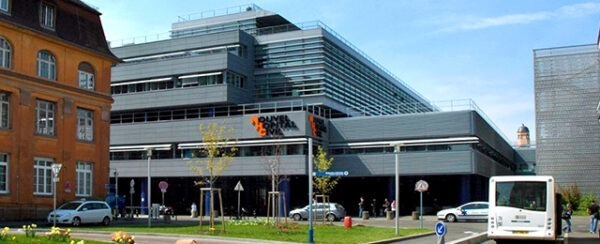
University Hospital of Strasbourg | Centre of Excellence

Dr. Roberto Luigi Cazzato is an interventional radiologist and academic professional who serves as an associate professor at the Hôpitaux Universitaires de Strasbourg. He has been affiliated with the institution for over 10 years, where he focuses on the field of interventional radiology. His clinical and research background is centered on image-guided therapies, specifically in the areas of oncology and musculoskeletal interventions.
Throughout his career, Dr. Cazzato has held several significant leadership and training roles. From 2020 to 2023, he served as the Chairman of the European Trainee Forum (ETF) for the Cardiovascular and Interventional Radiological Society of Europe (CIRSE), and he is the current chairman of the research committee within the same society.
His academic contributions are extensive, with a research portfolio that includes the development of clinical practice guidelines and the evaluation of new technologies. He has published work on percutaneous cryoablation in the oncologic field, CIRSE guidelines for vertebral augmentation, and the use of augmented reality and artificial intelligence for navigation during percutaneous vertebroplasty.
Get to know Dr. Cazzato a little bit better!
What are your hobbies and interests outside of your professional work in medicine?
Reading essays and classics of European literature; spending time with friends and family; walking in the countryside; and listening to podcasts.
Can you share a pivotal experience from your education or career that has significantly shaped your journey in interventional oncology?
When I was a resident, I had the opportunity to receive a CIRSE Fellowship Grant, which allowed me to join Jean Palussière and Xavier Buy’s team in Bordeaux for a six-month period. From that moment on, my journey in IR and IO never stopped and became a defining part of my professional life.
What motivated you to choose a career in interventional oncology over other medical specialties?
I discovered IR during my residency in Rome, thanks to Francesco Grasso, who introduced me to this discipline. At that time, ablations and IO procedures were increasing in number and precision. It was natural to be fascinated by this field, given its immediately rewarding results.
What inspired you to pursue IASIOS accreditation for your practice or institution?
The need for standardisation and the commitment to maintaining high standards in patient care.
How does IASIOS accreditation benefit both patients and interventional oncologists?
It pushed us to improve our performance at every step of IO care, from the organisation of the intervention to follow-up. Moreover, when drawbacks or flaws are identified, the IASIOS scheme encourages addressing and correcting them, thereby supporting the continuous improvement of patient care.
What key improvements has IASIOS accreditation brought to your interventional oncology services?
Standardisation and continuous improvement in patient care.
How do you envision the future of interventional oncology, and what role do you see it playing in the broader field of cancer care?
The future of IO is bright, especially if we embrace innovations such as combined treatments with immunotherapy and other novel systemic therapies, as well as advances in AI, robotics, and software confirmation systems.
What advice would you give to the next generation of interventional oncologists?
To enter the field and, above all, to embrace innovation through research, especially by making use of CIRSE infrastructure, namely Next Research (CIRSE CRO), which is specifically designed to support IR and IO research.
University Hospital of Strasbourg | Strasbourg, France