
To achieve the status of IASIOS Accredited Centre, you must meet all core requirements outlined in the Standards of Quality Assurance in Interventional Oncology, as well as complete an internal case review of 30 randomly selected patients.
For standard IASIOS accreditation, centres must meet all core criteria. Accreditation can only be granted if all core requirements are fulfilled.
To qualify for accreditation, centres must demonstrate sufficient IO clinical activity and list the types and numbers of IO therapeutic and pain palliative procedures performed during the past 12 months.
As part of the accreditation requirements, facilities must perform a minimum of 150 therapeutic interventional oncology procedures per year. The following procedure types count towards the 150-procedure requirement, for example:
• Ablations
• Chemoembolization
• Radioembolization
• Pain management
• Musculoskeletal interventions
• Other vascular oncology procedures
• Other therapeutic procedures in cancer care
All therapeutic interventional procedures and pain palliative procedures can be counted towards the 150 procedures requirement, for example:
- Tumor ablation
- Chemoembolisation
- Radioembolisation
- Hepatic arterial infusion/Bland embolisation
- Neurolysis
- Bone and spine augmentation techniques for malignancies
The following procedures are NOT considered eligible and must not be counted towards the 150-procedure requirement, but may be reported for benchmarking purposes:
• PICC lines and port implantation
• Biliary drainage for malignancies
• Nephrostomies / ureteral stents for malignancies
• Biopsies
The requirement for 150 annual therapeutic or pain-palliative interventional oncology procedures is intended to reflect a department’s experience in disease-modifying oncologic interventions and advanced pain palliation. Drainage and supportive procedures are essential components of patient care and interventional radiology practice, but they are primarily supportive interventions aimed at relieving obstruction rather than treating the tumour or providing definitive oncologic or pain-modifying therapy.
Including such procedures in the therapeutic IO threshold would risk inflating procedural volumes without demonstrating the advanced oncologic competencies that IASIOS accreditation is designed to benchmark. For this reason, these procedures are benchmarked separately and do not count toward the minimum therapeutic IO case volume.
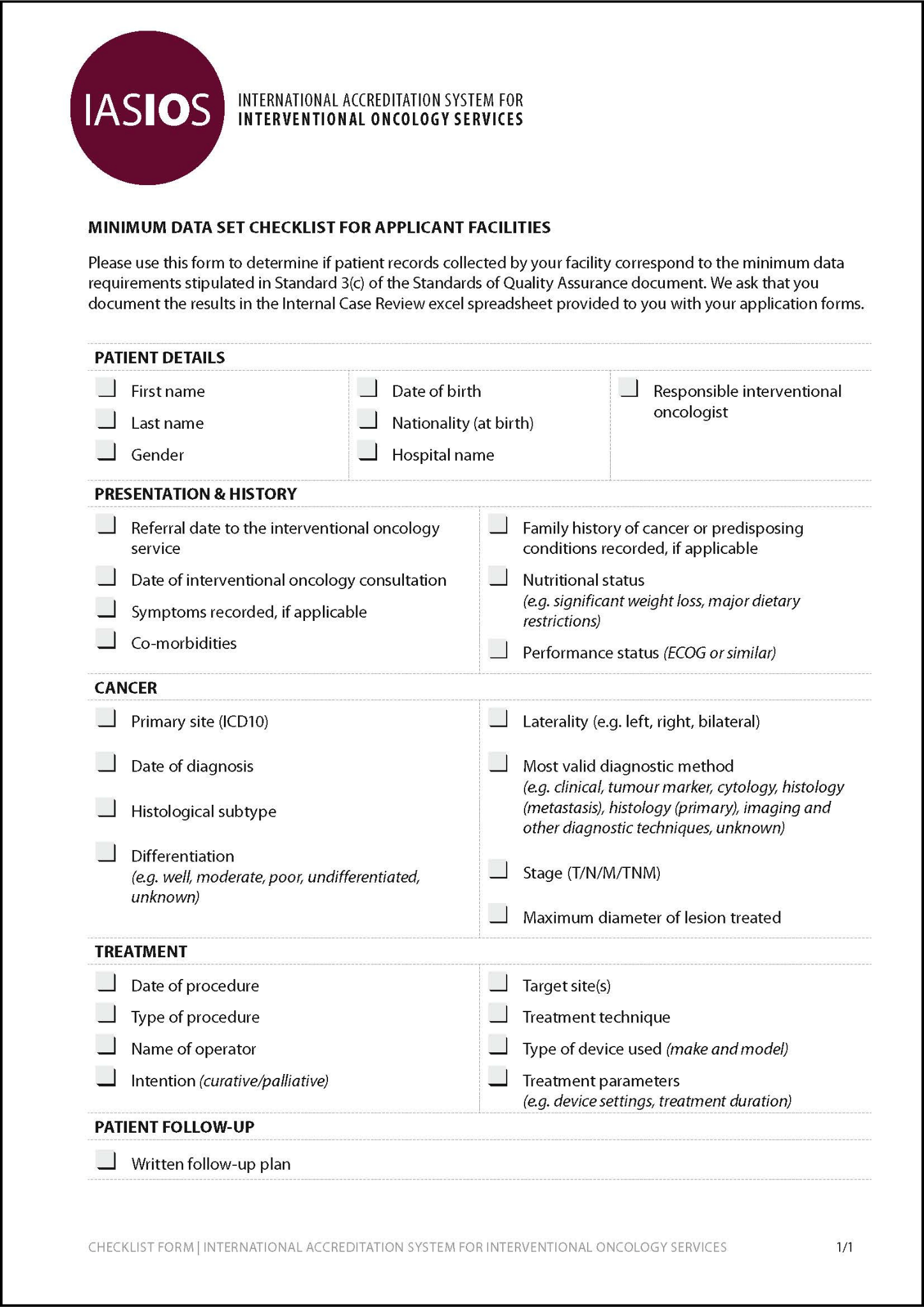
Check how your facility compares to the core criteria in the checklist below, and how your patient records compare to the minimum dataset.